
REVIEW · ANDALSNES
Geiranger: Sky to Fjord Downhill Biking Adventure
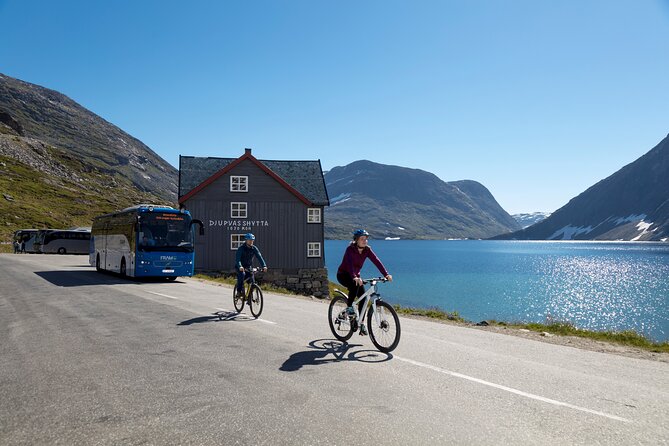
The best part of this ride is the simple idea: you start high beside Djupvatn Lake, then coast 16 kilometers toward Geiranger through waterfalls, valleys, mountain views, and fjord overlooks. You get the scenery without spending hours climbing a mountain by bicycle.
I like the excellent photo stops, especially Flydalsjuvet, and I like the freedom of riding at your own pace. The biggest thing to consider is that this is an unguided ride on a public road, with no dedicated bike path or shoulder in parts. You need to be comfortable controlling a bicycle near buses and other vehicles.
Key points to know before booking
- Start at 1,030 meters: A vehicle carries you from Geiranger up to Djupvatn Lake, where the ride begins.
- Ride 16 kilometers downhill: Most of the route is an easy coast, though one short uphill section may require a little pedaling or walking.
- Stop at major viewpoints: You can pause near Blåfjell, Kvandalls waterfall, Opplenskedalen Valley, Knuten, and Flydalsjuvet.
- Set your own pace: No guide rides beside you, so you decide when to stop, photograph, and continue.
- Small group size: The activity accepts a maximum of six people, which keeps the transfer fairly personal.
- Check the equipment carefully: Most experiences report good bikes, but one detailed account raised concerns about brakes, helmets, tire tread, and adjustment.
From Geiranger to Djupvatn Lake at 1,030 meters
The activity begins at Geirangervegen 10 in Geiranger. From there, an air-conditioned vehicle takes you uphill to Djupvatn Lake, the launch point for the ride. This transfer matters because it removes the hard work from the day. You are not cycling up a long mountain road before beginning the scenic section.
The drive also gives you a chance to settle in and look at the route from above. One account praised the drive as informative, while another noted a delay of about 20 minutes. I would leave some flexibility in your schedule, especially if you are connecting this outing with a cruise call or another timed activity.
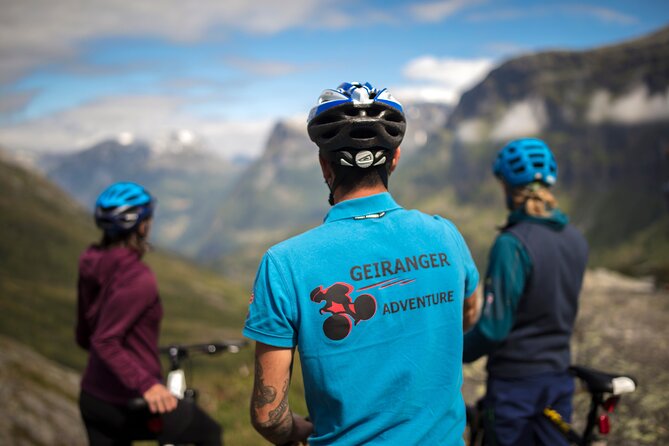
At the lake, the staff provide a bicycle, helmet, gloves, and visibility vest. You receive basic technical and safety instructions, along with advice for handling the descent. Since the ride is not guided, pay close attention at this point. Ask where the route continues, confirm how to contact the office in case of trouble, and make sure the bike fits before you roll away.
A well-adjusted seat is especially important on a downhill route. You should also test both brakes and check that the helmet strap sits securely. Most of the positive experiences describe the bicycles as easy to manage and the equipment as good. One sharply negative account described poorly adjusted bikes, sticky brakes, worn tires, small helmets, and a damaged vest. That appears to be an exception, but it is a useful reminder to inspect everything before starting.
A few more fjord days around Andalsnes worth a look
- E-Bike Tour in Geiranger
★ 4.5 · 6 reviews - E-bike Tour in Geiranger, Norway
★ 4.8 · 81 reviews - Geiranger Fjord: Downhill Self-Guided Bike Tour
★ 4.5 · 30 reviews
The 16-kilometer ride toward Geiranger
The route covers about 16 kilometers, or nearly 10 miles, down toward Geiranger. It is not a guided cycling tour with a leader pointing out every bend. Think of it as a supported self-guided descent: the company handles transport and equipment, then you ride independently.
That setup is one of the activity’s strengths. You can stop for photographs without waiting for a group. You can take the road slowly, enjoy the view, or keep rolling when the weather is cool and clear. One older rider, age 67, found the route easy to handle, and several accounts describe the ride as a gentle coast rather than a demanding athletic test.
Still, downhill does not mean effortless. You need to steer, brake, watch the road, and share space with traffic. The road has no bike path or shoulder in some sections, and large buses may pass close by. One couple chose not to ride after seeing the traffic conditions, though the driver, Marcell, kindly stopped for photographs during the descent.
That point deserves real weight. If you are nervous around vehicles, this may not feel like a carefree bicycle outing. If you regularly ride on roads and are comfortable controlling your speed, the route should feel much more manageable. Keep your attention on the road, not only on the fjord.
Blåfjell, Kvandalls waterfall, and the first views
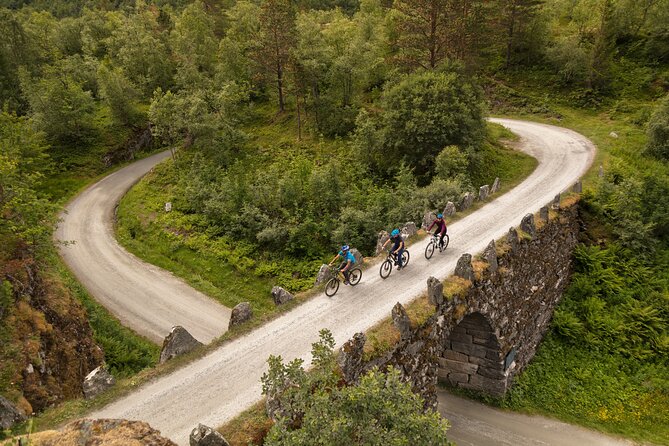
Early stops include a viewpoint at the foot of Blåfjell mountain and Kvandalls waterfall. These places give you the first strong change in scenery after leaving the lake. The high mountain setting gradually gives way to steep slopes, falling water, and glimpses of the valley below.
The waterfall stop is also a useful reminder to pace yourself. You are not being pushed from one point to the next by a guide, so you can pull over when it is safe and take a few minutes. Bring a phone or camera that is easy to reach, but do not handle it while riding. The views are worth stopping for.
Weather will shape this part of the outing. On a clear day, the mountain and fjord views are the main event. In cloud or rain, visibility may be limited, and wet roads can make braking more important. The company requires good weather for the activity to run. If conditions are poor, you are offered another date or a full refund.
Opplenskedalen Valley and Knuten
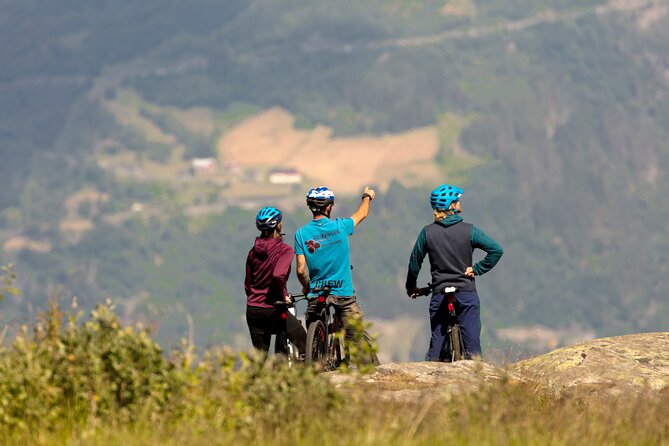
As you continue, the road passes Opplenskedalen Valley and Knuten. These sections offer a broader sense of the area than a single overlook can provide. Instead of one postcard view, you get a changing sequence of valleys, slopes, villages, and water.
The unguided format works well here. You can pause when the scenery opens up, then continue once the road is clear. One account even describes leaving the bikes at the beginning of a hike to Storsaeterfossen Waterfall, then returning to continue the ride. That suggests some flexibility, but I would not assume every side trip is built into the schedule. The activity lasts about two and a half hours, and you need to return the bicycle and complete the route within the available time.
There is also a small uphill portion. Several people found it minor, while one simply walked that section. This is not a serious weakness, but it is worth knowing if you booked because you expect every meter to be downhill. The ride is primarily a descent, not a continuous gravity run.
Same water, a different way to see it:
- Geiranger Shore Excursion: Mt. Dalsnibba and Eagle Road
★ 4.5 · 718 reviews - Geiranger: RIB Fjordsafari Geirangefjord
★ 4.5 · 651 reviews - Guided Boat Tour in Geiranger
★ 4.5 · 147 reviews - Geiranger: Excursions.no Mount Dalsnibba & Eagle’s Bend
★ 4.5 · 101 reviews
Flydalsjuvet, the grand finale
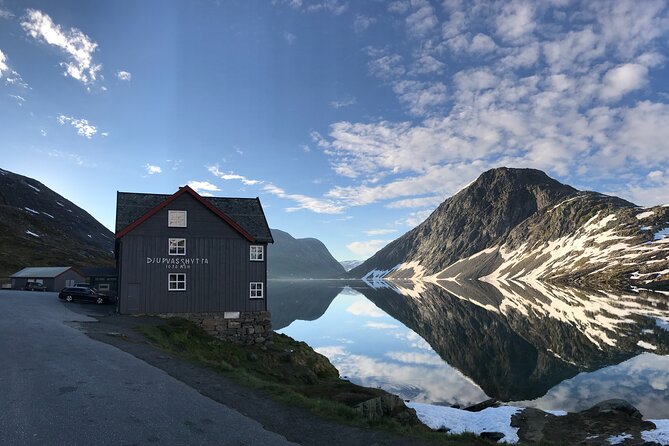
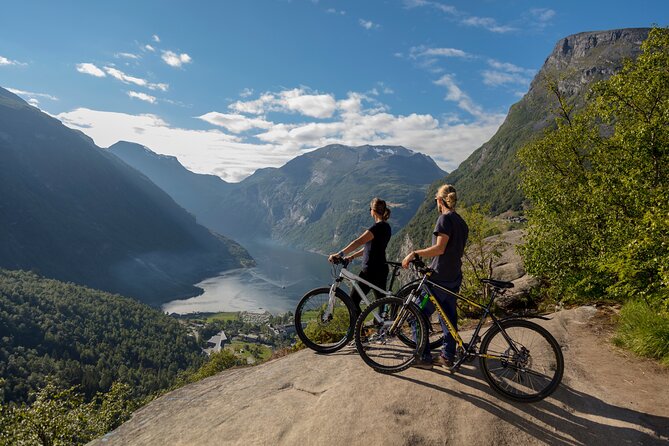
Flydalsjuvet is the most famous stop on the route and the listed itinerary highlight. This dramatic viewpoint looks toward Geiranger and the fjord country around it. It is the sort of place where a few minutes can easily become twenty, particularly in clear weather.
For many people, this will be the visual payoff of the outing. The route lets you arrive under your own power rather than simply stepping off a bus at a viewpoint. That gives the scenery a stronger sense of place. You have watched the road change from a high mountain start into a narrow route above the fjord.
Flydalsjuvet is also a good reason to save battery and storage space on your phone. You may want photographs at the lake, waterfall, valley, and final viewpoint, but this is likely the stop where you will take the most.
Equipment, safety, and the unguided format
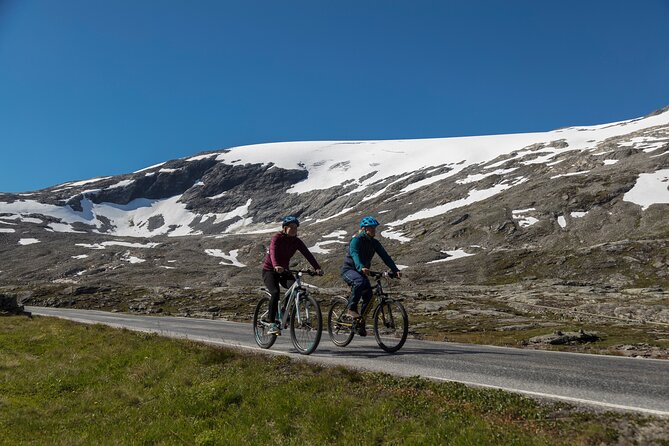
The included equipment is practical: bicycle, helmet, gloves, and visibility vest. The air-conditioned transfer vehicle is included as well. You do not need to arrange a separate ride up the mountain, which makes the experience easier to organize.
The absence of a guide cuts both ways. On the positive side, you ride privately with your own group and stop whenever you wish. There is no need to keep formation or match the speed of a large party. People who want quiet time with the scenery will appreciate that freedom.
On the other hand, you should not expect a guide beside you to manage traffic, explain every sight, repair a flat, or lead the way at the top. One person had no mobile service and found it difficult to get the office number when asking about a possible flat tire. Before leaving the vehicle, save the company contact details and ask what to do in an emergency.
The group limit is six people, which helps. You are not being released onto the road with dozens of bicycles. Even so, everyone in your party should understand the route and agree on sensible stopping points before setting off.
Is $160.09 a fair price?
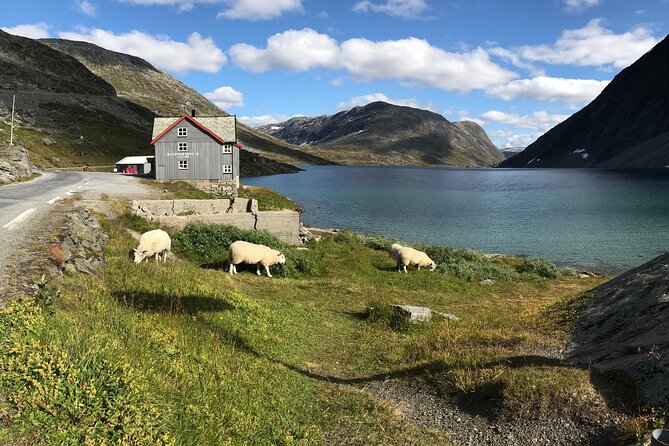
At $160.09 per person, this is not a cheap bicycle rental. The price pays for the uphill transfer, bicycle, safety gear, staff assistance, and the convenience of beginning at Djupvatn Lake. It also gives you a way to see several major viewpoints in roughly two and a half hours.
The value is strongest if you are arriving by cruise ship or have limited time in Geiranger. You get a scenic transfer, a memorable ride, and independent time at the viewpoints without arranging transport on your own. The small group maximum is another plus.
The value is weaker if you judge it strictly as a guided tour. There is no cycling guide accompanying you, no long explanation at each stop, and no extensive technical support on the road. One person felt the cost was high because the company mainly transported the group to the top and supplied bicycles.
Equipment quality also affects the price calculation. Several accounts describe smooth handling, good bicycles, and friendly staff. One detailed complaint raises enough concerns that you should inspect the brakes, tire condition, seat height, helmet fit, and vest before starting. If anything seems unsafe, speak up immediately.
Who will enjoy this ride most?
I would recommend it to a confident casual cyclist, an experienced road rider, or anyone who wants a scenic outdoor activity without a long climb. You do not need to be a competitive cyclist. The main physical demand is handling the bicycle for the full descent and managing the short uphill part.
It suits people who enjoy stopping for pictures and making their own decisions. The ride can feel relaxed because gravity does most of the work, but you still need road awareness and a moderate level of fitness.
I would be cautious about booking it for young children, people who are uncomfortable cycling near traffic, or anyone expecting a fully guided excursion. The supplied information does not list an age minimum, child-bike arrangements, or accessibility details, so you would need to confirm those points directly before booking.
The meeting point is near public transportation, and confirmation is provided when you book. Free cancellation is available up to 24 hours before the start time. If bad weather cancels the activity, you can choose another date or receive a full refund.
Should you book the Geiranger downhill bike ride?
Book it if you want big fjord views with a touch of adventure, are comfortable riding on a public road, and value freedom more than narration. The route combines a high mountain start, waterfalls, valleys, and Flydalsjuvet in one compact outing. For a cruise-day excursion, that is a strong use of time.
Skip it if you need a bike path, a guide beside you, or guaranteed top-grade equipment. If you do book, arrive ready to check the bike carefully, save the office contact information, listen closely at the safety briefing, and keep your speed under control.
For the right rider, this is one of the more memorable ways to see Geiranger. The price is substantial, but the combination of transport, scenery, and a self-paced descent can make it worthwhile.
FAQ
Where does the biking activity start?
The meeting point is Geirangervegen 10, 6216 Geiranger, Norway. The vehicle then takes you to Djupvatn Lake, where the bicycle ride begins.
How far do you ride?
The downhill route covers approximately 16 kilometers, or nearly 10 miles.
How high is the starting point?
The ride starts at Djupvatn Lake, about 1,030 meters above sea level.
Is the ride guided?
No. The downhill ride takes place without a guide. Staff provide equipment, technical instructions, safety advice, and tips before you begin.
What equipment is included?
A bicycle, helmet, bicycle gloves, and visibility vest are included.
Is transportation included?
Yes. An air-conditioned vehicle takes you from the meeting point up to the biking location.
What viewpoints can you see?
The route includes stops near Blåfjell, Kvandalls waterfall, Opplenskedalen Valley, Knuten, and Flydalsjuvet.
How many people can join?
The activity has a maximum of six participants.
What happens if the weather is poor?
The activity requires good weather. If it is canceled because of poor conditions, you can choose another date or receive a full refund. You can also cancel up to 24 hours before the start time for a full refund.
Just added around Andalsnes
- Kayak Tour with Waterfall Views in Geiranger★ 4.5 · 45 reviews
- 2-Hour Guided Kayak Experience in Geiranger★ 4.5 · 14 reviews
- Geiranger: Excursions.no Geiranger Highlights★ 3.5 · 19 reviews
- Geiranger by Royal route, 5 hours with visiting a high-mountain farm★ 5.0 · 3 reviews
- Geiranger Fjord Tour with Waterfall Tasting★ 4.5 · 13 reviews
- Private tour Geiranger and Glaciers 1 to 15 people★ 5.0 · 4 reviews
- City Sightseeing Geiranger Hop-On Hop-Off Bus Tour★ 3.0 · 34 reviews
- Geiranger Fjord Tour (Geiranger-Hellesylt one way)★ 3.0 · 5 reviews
Andalsnes Fjord Tours, compared.
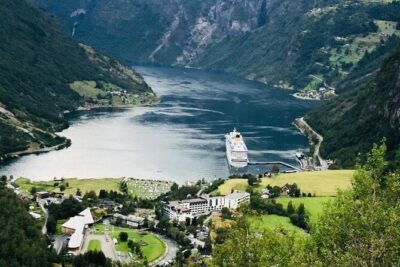
Geiranger Shore Excursion: Mt. Dalsnibba and Eagle Road
Read our review →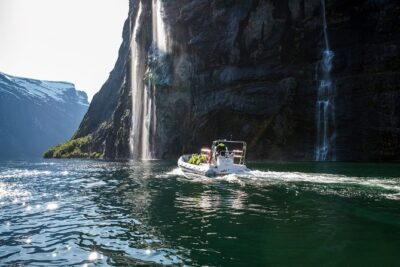
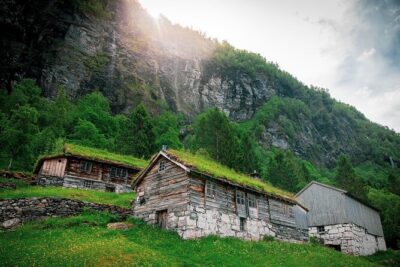
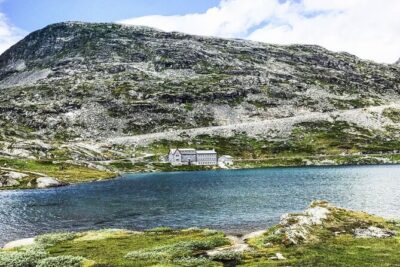
Geiranger: Excursions.no Mount Dalsnibba & Eagle’s Bend
Read our review →
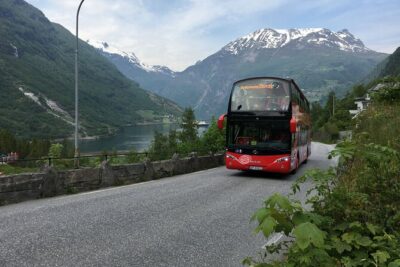
City Sightseeing Geiranger Hop-On Hop-Off Bus Tour
Read our review →
Browse the lists this tour appears in